Find us here
OpenAI’s Sora to Launch at the End of 2024

Admin
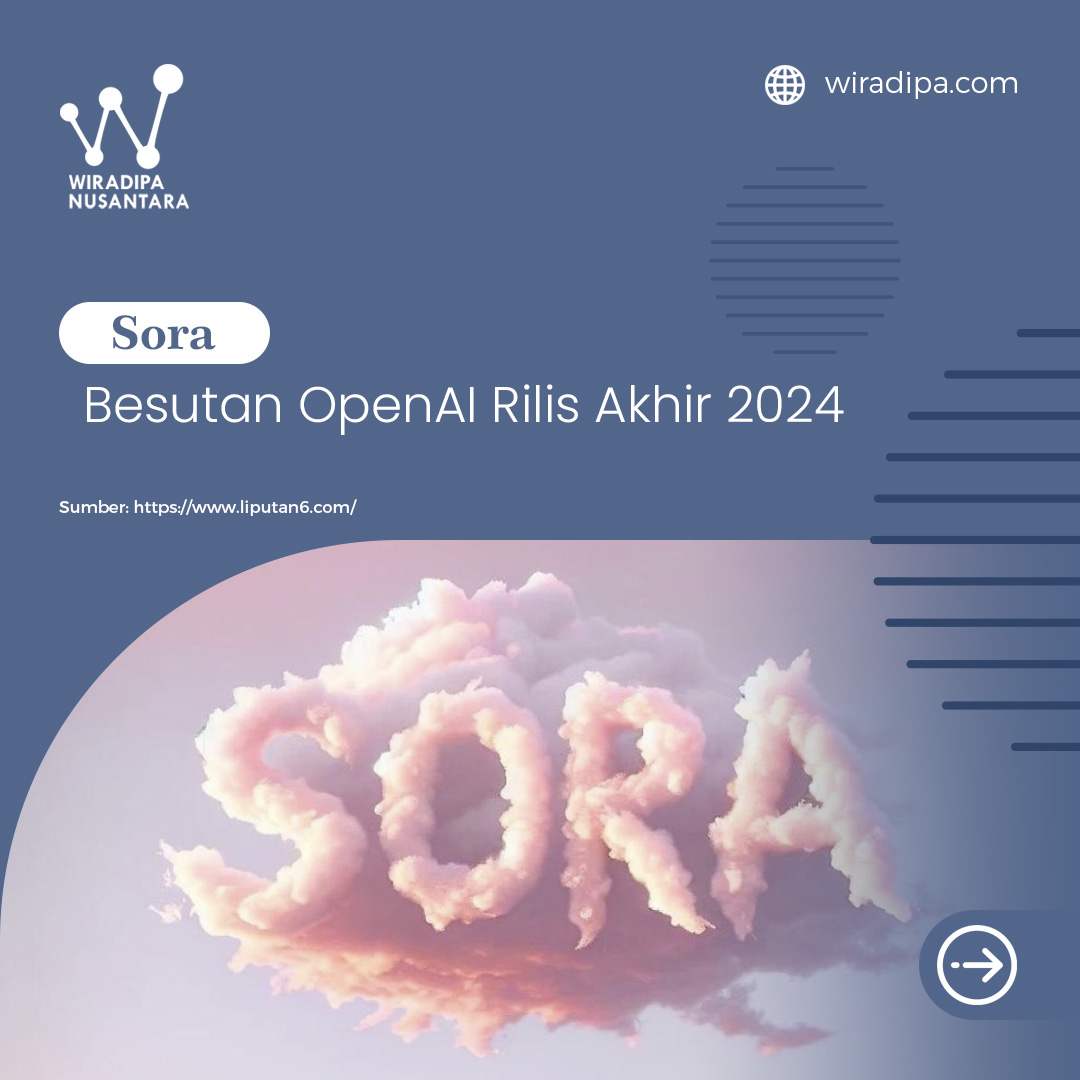
OpenAI, the company behind ChatGPT, has officially announced its newest AI model capable of turning text prompts into video. This powerful new model is called Sora.
However, when Sora was first introduced in February 2024, OpenAI did not reveal its release date. Now, in a recent interview with OpenAI CTO Mira Murati, the timeline for Sora’s launch has become clearer.
According to GSM Arena, Friday (March 15, 2024), Mira stated that Sora will arrive in just a matter of months. She confirmed that Sora is expected to launch at the end of 2024.
Although the release is still months away, many users are highly anticipating the model’s arrival—especially since Mira noted that Sora will be more expensive to operate than other AI models.
Even so, OpenAI aims to price it close to DALL·E. It was also mentioned that videos created using Sora will include a watermark and cannot be used to generate videos of public figures.
What Sora Can Do
Sora can generate highly realistic and imaginative scenes from text prompts. This text-to-video model allows users to create photorealistic videos up to one minute long.
According to OpenAI’s blog:
“Sora can create complex scenes with multiple characters, specific types of motion, and accurate details of subjects and backgrounds.”
Additionally, the company behind ChatGPT explained that Sora can understand how objects exist in the real world, interpret physical properties accurately, and generate characters that display realistic emotions.
More Than Just Text-to-Video
Sora is also capable of generating video from still images. It can fill in missing frames in existing videos or extend video footage seamlessly.
OpenAI showcased several demo videos on its blog, including aerial views of California and footage that appears to be taken from a moving train in Tokyo.
Even so, some AI artifacts remain noticeable—for example, a museum floor that moves unnaturally in one of the demos.
OpenAI acknowledged that the model may struggle to accurately simulate complex physical scenes, though the results remain highly impressive.
A few years ago, text-to-image generators like Midjourney dominated the field. Now, models like Sora are pushing the boundaries even further by transforming text into full-motion, realistic video.
Recent Articles


Featured Articles




























































.jpg)